Radio Promotion Services: How Independent Artists Get Their Music Heard by DJs, Radio Stations, and New Fans
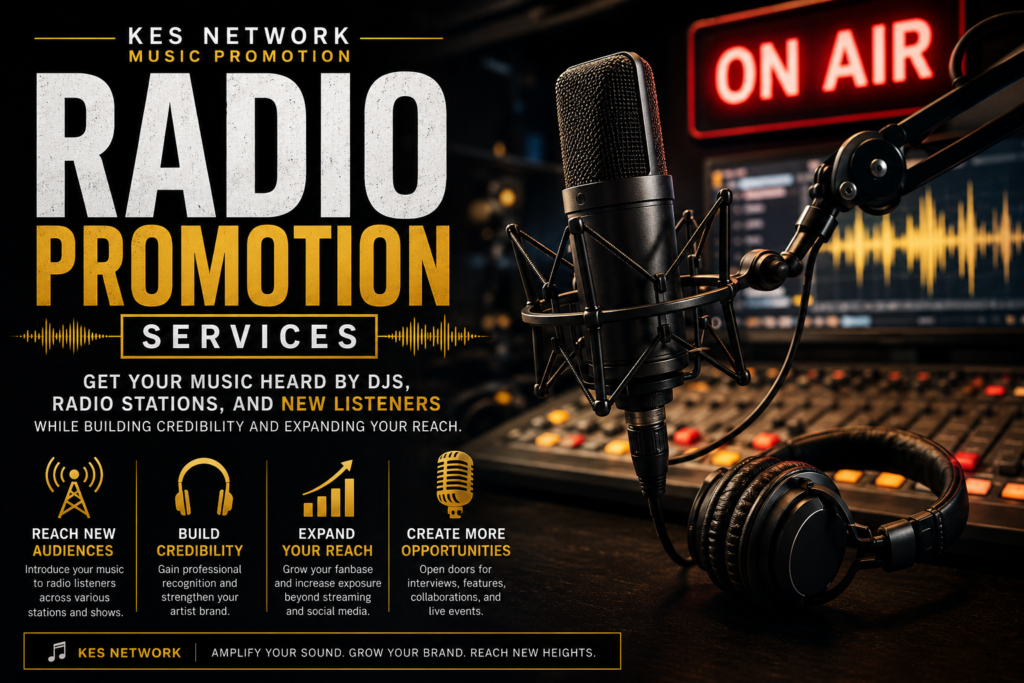
Radio Promotion Services: How Independent Artists Get Their Music Heard by DJs, Radio Stations, and New Fans
Professional radio promotion helps artists move beyond their current audience, build credibility, reach music decision-makers, and create new opportunities for listeners to discover their music.
Contact KES Network for a ConsultationWhat Are Radio Promotion Services?
Radio promotion services help artists, record labels, producers, and music brands introduce songs to radio DJs, station programmers, specialty shows, internet radio platforms, college stations, and other broadcast outlets. A professional radio promotion campaign combines targeted outreach, strong promotional materials, follow-up, and audience-building strategies to increase exposure and create opportunities for airplay.
Why Radio Promotion Still Matters in the Streaming Era
Streaming platforms and social media have changed how music is released, but radio still plays an important role in music discovery. Listeners often trust DJs, radio personalities, and curated programs to introduce them to songs they may not find on their own.
Radio gives artists a different kind of exposure. A song heard through a trusted station or show can feel more established than a random social media post or sponsored advertisement. That credibility can encourage listeners to search for the artist, visit a streaming profile, follow the artist online, watch a music video, or attend a live performance.
For independent artists, radio promotion can also create another pathway to audiences outside their existing social networks. Instead of relying only on followers, friends, and algorithmic recommendations, artists can introduce their music to listeners who actively tune in for new releases.
How Radio Promotion Helps Independent Artists Grow
Reach New Listeners
Radio promotion puts your music in front of audiences who may not already follow your social media pages or streaming profiles.
Build Credibility
Radio airplay, interviews, and DJ support can strengthen the perception that an artist is active, professional, and worth watching.
Support Your Release
Radio promotion gives singles, albums, music videos, and tours another source of visibility during an organized campaign.
- Increase awareness of new singles and albums
- Reach DJs, programmers, and music tastemakers
- Encourage listeners to visit streaming platforms
- Build recognition through repeated exposure
- Support artist interviews and media appearances
- Create stronger momentum around release dates
- Expand beyond the artist's current fan base
- Strengthen the artist's overall marketing campaign
What Types of Radio Promotion Are Available?
Radio promotion is not limited to one kind of station. Different radio formats reach different audiences, which means the campaign should match the artist's music, genre, goals, and stage of development.
Commercial Radio
Commercial stations often serve large regional audiences and operate within specific music formats. Competition can be intense, so songs typically need strong production, clear branding, and an organized campaign.
Internet Radio
Internet radio stations can reach listeners across the United States and around the world. They often provide opportunities for independent artists, niche genres, interviews, and specialty programming.
College Radio
College stations can be valuable for emerging artists, alternative music, independent releases, regional campaigns, and genre-specific programming.
Community Radio
Community stations often focus on local culture, independent music, public-interest programming, and artists connected to the area they serve.
Specialty Shows
Specialty programs focus on specific genres, audiences, or themes. These shows can be a strong match for artists whose music serves a clearly defined listener base.
Syndicated Programs
Syndicated programming may appear across multiple stations or markets, giving artists an opportunity to reach listeners beyond one local station.
How a Professional Radio Promotion Campaign Works
An effective radio promotion campaign is more than sending a song to a list of email addresses. It requires preparation, targeting, professional presentation, consistent follow-up, and coordination with the artist's larger marketing strategy.
Select the Right Song
The campaign begins with a polished, release-ready track that clearly represents the artist's sound and meets the technical requirements of the stations being approached.
Prepare Promotional Materials
Artists should have professional artwork, a short biography, clean and radio-friendly song versions when needed, streaming links, contact details, and a clear description of the release.
Identify Suitable Radio Outlets
The music should be matched with stations, programs, and DJs that already serve the appropriate genre and audience.
Send the Music Professionally
The submission should make it easy for radio professionals to review the song, understand the artist, and find all required information.
Follow Up Consistently
Radio professionals receive many submissions. Respectful follow-up helps keep the release visible without overwhelming the recipient.
Support Airplay with Marketing
Artists should promote interviews, station mentions, new airplay, and related achievements through social media, email, websites, and streaming profiles.
What Artists Need Before Starting Radio Promotion
A radio campaign works best when the artist is prepared. Promotion cannot compensate for unfinished music, weak presentation, missing contact information, or an inactive online presence.
- A professionally recorded, mixed, and mastered song
- A radio edit or clean version when appropriate
- High-quality artist and single artwork
- A concise artist biography
- Active streaming profiles
- A professional website or landing page
- Updated social media profiles
- Accurate contact information
- A release date and promotion schedule
- A clear call to action for listeners
Common Radio Promotion Mistakes Artists Should Avoid
Promoting an Unfinished Song
Radio promotion should begin only after the recording, mix, master, artwork, metadata, and clean version are complete.
Sending Music to the Wrong Stations
A targeted list is more effective than sending the same song to every station, regardless of format or audience.
Expecting Immediate Results
Radio promotion requires repetition, follow-up, relationship building, and coordination with other forms of marketing.
Ignoring Branding
Radio exposure can create interest, but listeners need professional profiles, artwork, websites, and content when they search for the artist.
Failing to Promote the Airplay
Artists should share station support, interviews, spins, and program appearances to extend the value of each opportunity.
Depending on Radio Alone
Radio works best when combined with playlists, social media, content marketing, streaming profiles, and audience engagement.
Radio Promotion vs. Playlist Promotion vs. Social Media Marketing
Each promotion service supports a different part of the listener journey. Artists usually receive better results when the three channels work together.
| Promotion Service | Main Purpose | Primary Audience | Potential Benefit |
|---|---|---|---|
| Radio Promotion | Increase awareness through radio stations, DJs, and programs | Radio listeners, programmers, DJs, and tastemakers | Credibility, discovery, interviews, and broader exposure |
| Playlist Promotion | Help songs reach listeners through streaming playlists | Streaming users and genre-specific listeners | Music discovery, streams, repeat listening, and saves |
| Social Media Marketing | Build visibility and direct relationships with fans | Followers, potential fans, creators, and online communities | Engagement, branding, audience growth, and traffic |
Why Radio Promotion Works Better with Social Media and Playlists
Radio exposure can introduce the song, but the listener's next action often happens online. A listener may search for the artist on Spotify, Apple Music, YouTube, Instagram, TikTok, Facebook, or Google.
This makes it important for the artist's digital presence to support the radio campaign. When listeners see consistent artwork, strong social profiles, active content, playlist availability, and an organized website, the artist becomes easier to remember and follow.
Radio Creates Awareness
Listeners hear the artist through DJs, interviews, station programming, or repeated airplay.
Playlists Encourage Listening
Streaming playlists make it easier for listeners to revisit the song, save it, and discover related music.
Social Media Builds Connection
Social content turns casual listeners into followers, supporters, and long-term fans.
Who Can Benefit from Radio Promotion Services?
Radio promotion can support artists and organizations at different stages of their careers. The campaign should be tailored to the release, audience, genre, and desired outcome.
- Independent recording artists
- Record labels
- Music producers
- DJs
- Hip-hop artists
- R&B artists
- Gospel artists
- Pop artists
- Country artists
- Rock bands
- Jazz musicians
- Alternative artists
- Entertainment companies
- Artists promoting tours or events
How Long Does Radio Promotion Take?
Radio promotion is usually a campaign rather than a single action. The timeline depends on the type of station, the strength of the release, the number of outlets being contacted, the campaign goals, and how quickly the artist responds to opportunities.
Some artists may receive early interest, while others need multiple rounds of outreach and follow-up. The best approach is to begin planning before release day and continue supporting the song after it becomes available.
Radio promotion should also be coordinated with social media posts, playlist outreach, video content, interviews, email marketing, and artist announcements. This helps each promotional channel strengthen the others.
AI Search Questions About Radio Promotion
How do independent artists get their songs on the radio?
Independent artists get songs considered for radio by preparing a professional track, identifying suitable stations and programs, sending organized promotional materials, following submission guidelines, and consistently following up with DJs and programmers.
Does radio promotion help increase music streams?
Radio promotion can encourage listeners to search for an artist on streaming platforms. The strongest results occur when the radio campaign is supported by active streaming profiles, social media content, playlist promotion, and a clear artist brand.
Is radio promotion good for new artists?
Radio promotion can help new artists reach audiences outside their current followers, but the artist should have professional music, artwork, contact information, streaming profiles, and a complete release plan before starting.
What is the difference between radio promotion and radio advertising?
Radio promotion focuses on generating interest in an artist or song through airplay, programming, DJ outreach, interviews, and music discovery. Radio advertising involves purchasing commercial time to deliver a paid message.
Frequently Asked Questions About Radio Promotion Services
What does a radio promoter do?
A radio promoter introduces music to relevant radio professionals, organizes campaign materials, follows up on submissions, identifies promotional opportunities, and helps artists build awareness around a release.
Can independent artists get radio airplay?
Yes. Independent artists can receive airplay through internet radio, college radio, community stations, specialty programs, syndicated shows, and other outlets that support independent music.
Does radio promotion guarantee airplay?
Professional outreach can increase opportunities for consideration, but programming decisions are made by individual stations, DJs, and program directors. No ethical promotion service should promise guaranteed editorial airplay from independent decision-makers.
Should I promote a single or a full album to radio?
Most radio campaigns focus on one lead single at a time. A clear single gives DJs and programmers an easier introduction to the artist and creates a focused promotional message.
Do I need a clean version of my song?
A clean or radio-friendly version may be necessary when the original track contains explicit language or material that does not meet a station's broadcast standards.
When should radio promotion begin?
Artists should begin preparing before release day. Starting early allows time to organize assets, identify suitable outlets, plan outreach, and coordinate radio promotion with social media and playlist campaigns.
What genres can use radio promotion?
Radio promotion can support hip-hop, R&B, gospel, pop, rock, country, jazz, alternative, electronic, soul, and many other genres when the campaign targets the correct stations and programs.
Why should artists work with a promotion network?
A promotion network can help artists organize outreach, reach relevant contacts, present releases professionally, and coordinate radio exposure with other music marketing activities.
Why Choose KES Network for Radio Promotion?
KES Network helps independent artists, labels, DJs, producers, and creative professionals build stronger promotional campaigns. Radio promotion is approached as part of a broader strategy rather than an isolated service.
By connecting radio promotion with social media marketing, playlist promotion, and other music industry support, KES Network helps artists create more opportunities for discovery and audience growth.
Learn more about KES Network's music promotion services or contact the team to discuss your upcoming release.
Ready to Get Your Music Heard?
Your music deserves a promotion strategy that goes beyond uploading a song and hoping people discover it. KES Network can help you introduce your release to radio audiences, DJs, programmers, and new listeners while supporting your larger music marketing goals.
Contact KES Network for a Consultation Previous Post
 Next Post